Articles tagged " Equality"

Articles

(c) Christoph Püschner/Brot für die Welt
Mali / Bamako, Dez. 2017: eine Selbsthilfegruppe von zurückgekehrten Migrantinnen, die sich gegenseitig bei der Integration unterstützen.

"Pandemic increases violence against women"

Interview with Léa Rouanet

African countries still face huge gender gaps in terms of access to work and capital. What are the consequences of Corona for women in Africa? Jan Rübel interviewed Léa Rouanet on lockdowns and gender-based violence. The economist works at the Africa Gender Innovation Lab of the World Bank.

Read more

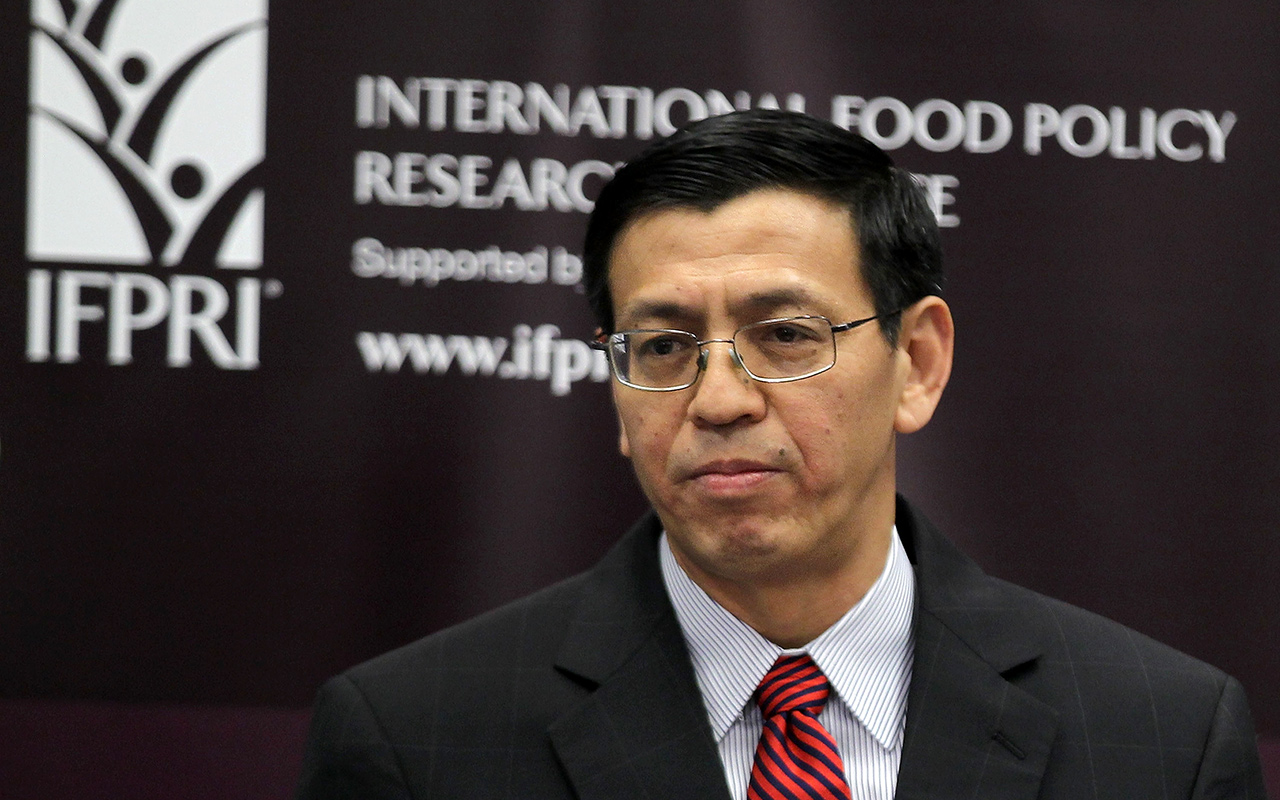
A man in a suit and glasses speaks at an International Food Policy Research Institute event.

5 questions to S. Fan: Where are the new roads?

Interview with Shenggen Fan

Shortly before ending his position as Director General of the International Food Policy Research Institute (IFPR) Dr. Shenggen Fan talks about the reforms and new modes of operation needed to achieve global food security in the coming decade.

Read more

A large video wall displays numerous participants in a virtual conference with a "goes virtual" banner prominently featured.

GFFA 2021 focussed on climate and COVID-19

A report by David Sahay (Zeitenspiegel)

110 speakers from 120 countries met virtually at the Global Forum for Food and Agriculture (GFFA) to discuss the challenges to global food supply. They asked the question: How can food systems support the health of people and the planet?

Read more

Teilnehmer einer Schulung im Digital Transformation Center Kigali, Ruanda. © Mali Lazell, GIZ

Africa's rapid economic transformation

A report by T. S. Jayne, A. Adelaja and R. Mkandawire

Thirty years ago, Africa was synonymous with war, famine and poverty. That narrative is clearly outdated. African living standards are rising remarkably fast. Our authors are convinced that improving education and entrepreneurship will ensure irreversible progress in the region even as it confronts COVID-19.

Read more

Vibrant scene in Abidjan market with vendors balancing colorful fruits and vegetables on trays amid bustling crowds.
Food market in Abidjan. © GIZ

Reference values: A building block on the road to social equality

A contribution by Friederieke Martin (GIZ)

A quick and cost-effective method calculates living wages and incomes for many different countries. The GIZ together with Fairtrade International and Richard and Martha Anker have developed a tool that companies can use to easily analyse income and wage gaps.

Read more

A supermarket receipt design displays "SUPERMARKT-CHECK 2020" with logos, focusing on retail evaluation.

Supermarket Scorecard on Human Rights

A contribution by Dr. Franziska Humbert (Oxfam)

Oxfam’s supermarket scorecard, which is in its third year, shows one thing in particular - it works! Supermarkets can change their business policies and focus more on the rights of those people around the world who plant and harvest food. However, this does not happen without pressure. 

Read more

A man in a white coat examines labeled seed bags on wooden shelves, showcasing a collection of agricultural samples.

Wanted: German investment in African agriculture

Interview with Stefan Liebing

Stefan Liebing is chairman of the Africa Association of German Business. The manager calls for a better structure of African farms. Jan Rübel asked him about small farmers, the opportunities for German start-ups and a new fund.

Read more

A group of women, some wearing green "d.light" shirts, gather for a photo in a well-lit room.

How the self-help approach empowers smallholder women

A report by INEF and Kindernothilfe

Supporting groups of smallholding women substantially contributes to strengthen rural operations economically. The organisation and associated group activities can help to reduce extreme poverty and improve the food situation.

Read more

Four smiling children joyfully eat together at a table, sharing bowls of food in a warm, vibrant setting.

School Feeding: A unique platform to address gender inequalities

A contribution by Carmen Burbano de Lara (WFP)

Besides the well known impacts of Covid19 lockdowns for the adult population, the associated school closures led to 90 percent of the world’s children with no access to schools. However, school meals are in often the only daily meal for children. Without access to this safety net, issues like hunger, poverty and malnutrition are exacerbated for hundreds of millions of children.

Read more

A smiling woman wearing a colorful headscarf stands in a sunlit field, exuding joy and confidence.

Africa's face of agriculture is female

A contribution by Beatrice Gakuba (AWAN-AFRIKA)

Africa has a huge opportunity to make agriculture its economic driver. However, the potential for this is far from being made exhaustive use of, one reason being that women face considerable difficulties in their economic activities. The organisation AWAN Afrika seeks to change this state of affairs.

Read more

Women in Burkina Faso harvest fresh vegetables in a lush, green field, showcasing their agricultural skills.

Gender equality: Essential for food and nutrition security

A contribution by Carsta Neuenroth (BfdW)

The majority of producers in developing countries are women. Although they contribute significantly to the food security of their families, they remain chronically disadvantaged in male-dominated agriculture in terms of access to land, credit, technology and education.

Read more

Women in colorful attire are planting saplings in a training center garden.

Success story allotment garden: Food supply and women's empowerment

A contribution by Nadine Babatounde and Anne Floquet (MISEREOR)

To prevent malnutrition among young children and strengthen the role of women in their communities, Misereor, together with the local non-governmental organisation CEBEDES, is implementing a programme on integrated home gardens in Benin - a series of pictures.

Read more

Four women smile while selling dried fish and seafood in a lively green market setting.

Planetary Health: Recommendations for a Post-Pandemic World

A contribution by Dr. Kathleen Mar and Dr. Nicole de Paula

Against the backdrop of the COVID-19 pandemic, health is receiving unprecedented public and political attention. Yet the fact that climate change is also affecting the environmental and social determinants of health in a profound and far-reaching way deserves further recognition.

Read more

A woman in a vibrant pink dress tends to young rice plants in a lush, green paddy field.

Why organic is a „blessed” method

An Interview by Claudia Jordan

Three female entrepreneurs from Mozambique, Sri Lanka and Uganda tell their stories about starting organic businesses from scratch, now selling Baobab Oil, Gotukola powder and Shea butter in international markets. And they explain why their business is almost 100 percent female.

Read more

A group of men wearing masks engage in a fruit preparation activity, emphasizing that nutrition is not just a woman's concern.

Nutrition is not just a women’s issue

A contribution by GIZ

When women have control over the resources of a household and manage the income, it usually leads to a more balanced and healthier diet for the family. But often the decision-making power lies with the men. How can this gender inequality be addressed? The GIZ global project Food Security and Resilience provides insights into project work on gender-transformative approaches finances by the Federal Ministry for Economic Cooperation and Development (BMZ).

Read more

Solar panels are installed in a rural area, harnessing renewable energy under a clear blue sky.

Unlocking the potential of agrivoltaics

A contribution by Fraunhofer Institute

Agrivoltaics is a concept that combines photovoltaic electricity generation and agricultural production, providing the opportunity for a more efficient land use and contributing overall to the integration of food, energy and water systems. This can be particularly interesting for countries in the Global South, where rural electrification rates are often low and food security needs to be improved.

Read more

Wind turbines stand on a lush rural landscape, harnessing green energy under a cloudy sky.

The rush for green energy shouldn’t undermine rights of pastoralist communities

A contribution by Hussein Tadicha Wario

Africa’s drylands seem to be predestined for generating solar and wind power – especially given the current hype over green hydrogen. However, pastoral communities are often put at a disadvantage in this respect. Our author describes the arising conflicts and what successful coexistence of green energy projects and the communities could look like.

Read more

A woman in a patterned outfit harvests bananas in a lush field, surrounded by tall green plants.

Against all Odds

A Contribution by Claudia Huber

Rose Okello is a Matoke farmer and single mother living in a village near Mbarara, a town in southern Uganda. To ensure that she can pay for her family's food, her children's school fees and other expenses on time, Rose uses various financial services. Her story portrays hurdles but also hope for women in agribusiness.

Read more

A woman in a pink headscarf and floral dress stands confidently in a lush garden. | © Claudia Jordan

Stick together and learn from each other

By Claudia Jordan

During the Women Leadership Programme in May 2024, around 20 women from African countries and Germany met again for a one-week workshop in Bavaria, Germany to become fit for leadership in their organisations. One topic that concerns the women across countries is climate change, but also violence against women and their discrimination in agriculture.

Read more

A diverse group of women joyfully pose together on a rooftop, celebrating female leadership and empowerment.

Female Leadership: A Key Lever for Transformation?

A Conversation with Carmen Torres Ledezma & Oluwaseyi Kehinde-Peters

Female Leadership is vital to the transformation of agriculture and food systems. Therefore, it is so important to advance gender-sensitive approaches to increase the presence of women in leadership positions in agricultural production and to make these systems more equitable, sustainable and resilient.

Read more

A woman in a blue sari arranges white silk cocoons on a woven wall in a rural setting.

Gender-Transformative Approaches – Unlocking Everyone’s Potential

A Contribution by GIZ

Studies show that women often manage agricultural resources more effectively and sustainably. With equal access to production resources, agricultural yields could increase by up tp 30 per cent. But this is about more than just productivity. How can gender-transformative approaches (GTA) drive meaningful change and why are GTA key to sustainable change?

Read more

A woman at a trade show proudly displays organic food products in front of a booth showcasing diverse packaged goods.

BIOFACH as a game changer for organic producers

A Contribution by Claudia Jordan

In 2025, GIZ and the Import Promotion Desk (IPD) celebrate ten years of successful cooperation. With their joint stand at BIOFACH trade fair in Nuremberg, they were able to introduce over 300 organic companies of partner countries to the European market. And the journey continues – despite challenges on the global market.

Read more

A smiling woman in a polka dot dress holds a baby, embodying change and joy in a lush outdoor setting.

Women as Change Agents

A conversation with Caroline Kayanja, Dr. Eileen Nchanji, & Theresa Herbold

A transformation of agricultural and food systems is not possible without overcoming structural gender inequalities. In this discussion, Caroline Kayanja (UCOBAC), Dr Eileen Nchanji (CIAT) and Theresa Herbold (Ministry of Development) reflect on the key challenges and solutions – from land access and representation to women-led collectives and innovative technologies.

Read more

Illustrated icons highlight six collaborations aimed at creating fair and sustainable supply chains.

Stronger toghether: Six collaborations for fair agricultural supply chains

A Listicle by Yvonne Bielfeld

For everyone in the supply chain to benefit, it is essential that politics and business work together. The measurable successes of such partnerships are demonstrated by the following six projects: they show how cooperation with the business sector can make supply chains fairer, more resilient, and more sustainable step by step.

Read more

A woman smiles confidently inside her small shop, surrounded by various goods, symbolizing economic equality and care.

The Gap the Economy cannot afford

A Study by CARE

In a new study, the international humanitarian agency CARE analyses how the economic and social barriers faced by women significantly reduces the global gross domestic product (GDP). At the current rate, it will take 152 years to close the economic gap between women and men – although closing this gap would be extremely profitable from an economic perspective.

Read more

A man wearing traditional attire and a purple hat stands outdoors in front of trees and a building.

"We have high expectations of the Kampala Declaration"

An Interview with Lawani Arouna

The rural population and vulnerable groups should be involved in the implementation of the African Union's Kampala Declaration on the transformation of agricultural and food systems. This is the demand of sociologist Lawani Arouna, Vice President of the Regional umbrella organisation of farmers' associations in West Africa (ROPPA).

Read more

A man collects natural rubber from a tree, holding a container and tapping tool in a lush forest. | © GIZ

From the Tree to the Street: The Story of Natural Rubber

A Contribution by Carlos Castellanos & Yvonne Bielfeld

The shoe manufacturer Cueros Vélez as a good example of private sector responsibility: the photo gallery shows how the bark of the rubber tree becomes a reliable yet deforestation free companion on our roads.

Read more